
Parents plan the nursery down to the outlet covers. They compare car seats for weeks, memorize a feeding schedule, and pick a pediatrician before the baby ever comes home. Teeth rarely make that list.
For most families, the subject comes up sideways. A pediatrician mentions it at a well-child check. A lower tooth breaks through at seven months, and suddenly there is something to brush. A grandparent asks when the baby is seeing a dentist, and the question lands with a small jolt of guilt.
If that sounds familiar, you have company. In our Colorado Springs office, the most common reaction we get from new parents is surprise at the timing. Nobody hands you a schedule for this, and the guidance that does exist tends to live in clinical journals rather than on the pamphlet rack at the pediatrician’s office.
So here is the whole picture: when the first dental visit should happen, what actually goes on during it, what your baby’s mouth is doing in the background while all of this unfolds, and what you can do at home between appointments. No scare tactics, no upsell. Just what Dr. Ken Otterstedt tells families every week.
The First Dental Visit Happens Earlier Than Almost Anyone Expects
Ask ten parents when a child should first see a dentist, and most will say three or four years old. That is the age when a child has a full set of primary teeth, can follow instructions, and will sit still long enough to make the appointment feel productive.
The actual guideline is a lot earlier. The American Academy of Pediatric Dentistry recommends that a child see a dentist by age one or within six months of the first tooth erupting, whichever comes first. This is not an elevated-risk protocol for families with a cavity history. It is the baseline for every child.
The reasoning has less to do with the teeth themselves and more to do with what a dentist can see at that stage. Cavity-causing bacteria colonize an infant’s mouth long before a parent can spot a problem. Feeding patterns that seem harmless at nine months can turn into decay by eighteen. Jaw and soft tissue development follows a predictable arc, and deviations from it are far easier to address while a child is still growing quickly. Infant dental care at this stage is mostly diagnostic and educational.
What “by the first birthday” actually means in practice
Pediatric dentistry uses the term dental home. It describes an ongoing relationship between a family and a dental practice rather than a one-off appointment. The first dental visit age 1 recommendation exists to establish that relationship early, so that when something does come up, whether that is a chipped tooth on the coffee table or a stubborn cavity on a molar, you already have a dentist who knows your child’s history and your child already knows the office.
If your child is already past that window
Plenty of the babies we see are older than twelve months at their first appointment, and nothing about that is a failure. But it is worth being honest about the tradeoff. A first dental visit at age 2 means roughly a year of preventive guidance you did not get, and it usually means the child’s habits around brushing, bottles, and snacking are already set. Habits are easier to shape than to reverse. If your child is approaching two and has not been seen, book the appointment now rather than waiting for a third birthday.
Baby Teeth Do Real Work, and They Do It Early
“They’re going to fall out anyway” is the line we hear most often, and it is understandable. Primary teeth are temporary by design. But they are load-bearing while they are there.
Speech
Teeth shape sound. The consonants that give a toddler’s speech clarity, particularly the ones formed against the front teeth and the ridge behind them, depend on those teeth being present and positioned correctly. Severe decay or early tooth loss during the years when language is developing fastest can make a child harder to understand, which affects how much they talk and how much feedback they get from adults.
Eating and growth
A child with an aching tooth stops chewing on that side, then avoids the textures that hurt. Parents often read this as picky eating. Sometimes it is. Sometimes it is pain, and it narrows a diet during a period when nutrition is doing a lot of structural work.
Holding space for permanent teeth
Each primary tooth reserves the space its permanent successor will eventually occupy. Lose one early to decay or infection, and the neighboring teeth drift into the gap. The permanent tooth arrives to find its parking spot taken, which is one of the more common reasons children end up needing orthodontic intervention or a space maintainer later on.
Setting the emotional baseline
Dental anxiety is largely learned, and it is usually learned early. A child whose first several dental experiences were short, gentle, and free of anything painful tends to carry that into adolescence and adulthood. A child whose first experience was an emergency filling at age four often does not. This is the quietest argument for early infant dental care and, in our experience, the one parents thank us for years later.
What Actually Happens at a First Dental Visit
Most parents arrive braced for a struggle. The reality is closer to a long conversation with a short exam attached.
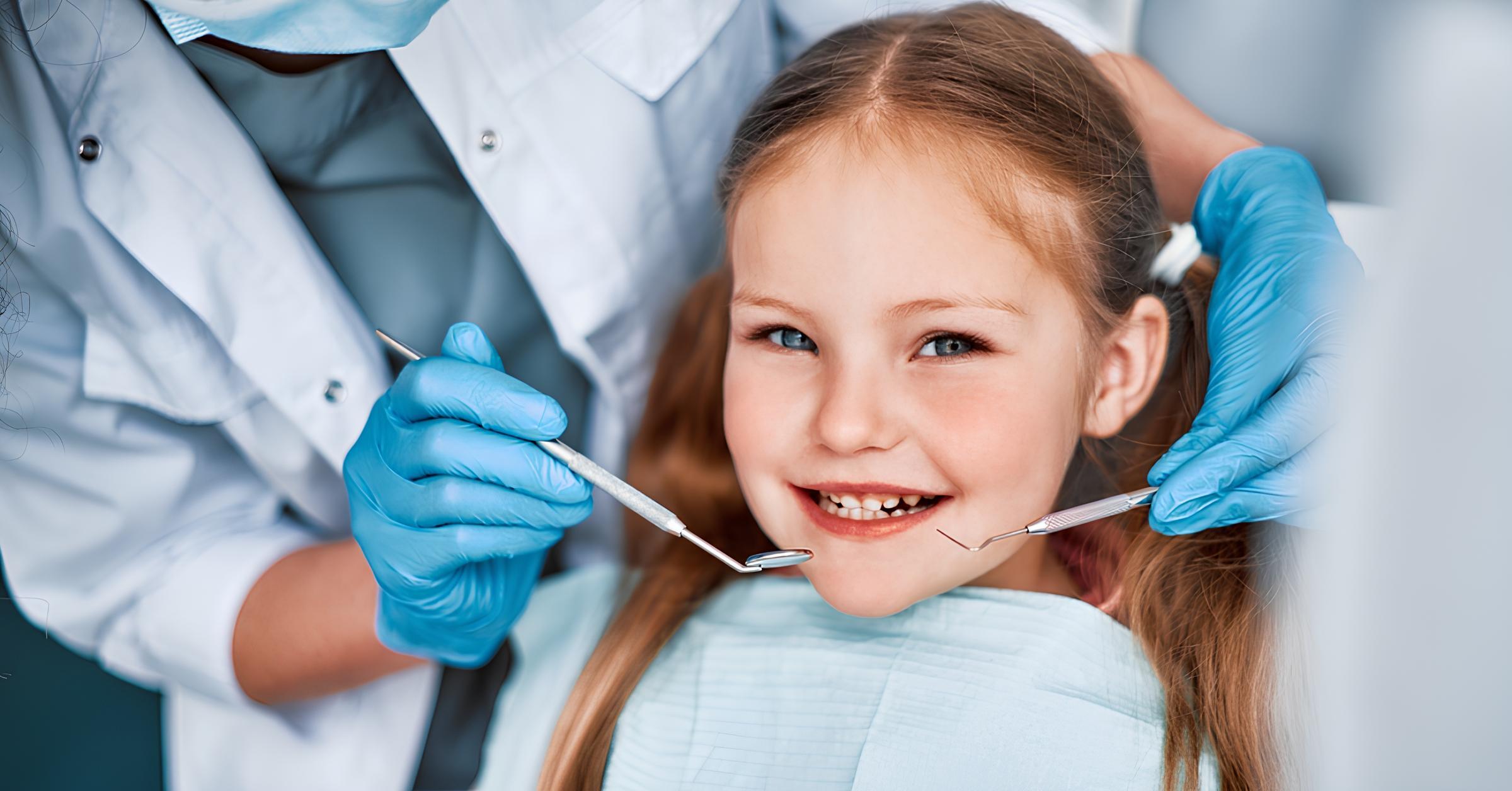
For babies and young toddlers, Dr. Ken typically uses a knee-to-knee exam. You sit facing him, your baby lies back across both of your laps, and your child stays in physical contact with you the entire time. No separate chair, no stranger holding them down. It takes a couple of minutes.
During the exam, he checks the erupted teeth and the gum tissue around them, looks at the tongue, palate, and frenulum attachments, evaluates how the jaws are relating to each other, and looks for the earliest signs of demineralization. He will also do a caries risk assessment, which is a structured way of weighing your child’s specific factors: family history of decay, feeding and sleep patterns, fluoride exposure, and what the exam itself shows. A fluoride varnish may be applied if it is appropriate for your child.
There are no drills, no needles, and no X-rays at a typical first appointment. Some babies fuss. That is normal, and it does not mean the visit went badly. Crying actually gives Dr. Ken a better view.
The Appointment Is Built for Parents as Much as Babies
The clinical portion is brief because the exam findings on a nine-month-old are usually limited. The rest of the appointment goes to you.
Pediatric dentistry calls this anticipatory guidance: telling parents what is coming next so they can prepare for it instead of reacting to it. At a first dental visit with Dr. Ken, that conversation usually covers how to clean gums and first teeth, how much toothpaste to use and when to start, which teething symptoms are ordinary and which are worth a phone call, how bottle and breastfeeding patterns interact with decay risk, when pacifier and thumb-sucking habits start affecting tooth position, and what warning signs should prompt a call before the next scheduled checkup.
You leave with a plan for infant dental care at home, tailored to your child and your actual routine. That is the part that changes outcomes.
Infant Dental Care at Home Is Where Most of the Work Happens
Two checkups a year add up to maybe an hour of professional attention. The other 8,759 hours are yours. Here is what matters most in that first stretch.
Start before the first tooth
Wipe your baby’s gums precisely and carefully with a clean, damp cloth after feedings. This clears milk residue and the bacterial film that builds up on gum tissue well before any teeth arrive. It also normalizes the sensation of having their mouth cleaned, which makes the transition to a toothbrush much less of a fight. Dr. Ken will walk you through the technique at the first dental visit.
The rice grain rule
Once the first tooth erupts, brush twice a day with a soft infant brush and a small smear of fluoride toothpaste- almost about the size of a grain of rice, not more than that. That amount is small enough to be safe if swallowed and large enough to strengthen enamel. Fluoride-free training pastes are popular, and they do very little. Move up to a pea-sized amount around age three.
Bottles, night feeds, and sippy cups
Early childhood caries has a recognizable pattern: decay on the upper front teeth in a child who falls asleep with a bottle. Milk, formula, and juice all contain fermentable sugars. During sleep, saliva flow drops sharply, so those sugars sit against the enamel for hours with none of the natural rinsing that happens while a baby is awake. If your child needs a bottle to settle, fill it with water. The same logic applies to a sippy cup of juice carried around all afternoon: the problem is duration of exposure, not volume.
Chalky white spots
Decay does not start as a hole. It starts as a dull, chalky white line along the gumline, most often on the upper front teeth. At that stage it can often be halted or reversed. Once it darkens or cavitates, it cannot be reversed. If you see white spots between appointments, call your infant dentist rather than waiting for the next checkup.
Teething, Tongue Ties, and the Things Parents Actually Ask About
A rough eruption timeline
Lower central incisors usually arrive first, somewhere around six to ten months, followed by the upper centrals, then the lateral incisors, first molars, canines, and second molars. Most children have all twenty primary teeth by roughly age three. There is real variation in this. A baby with no teeth at eleven months is usually fine, and a baby born with a tooth is unusual but not alarming. Either way, an infant dentist can tell you whether the pattern is within normal range.
What teething does and does not cause
Teething causes drooling, gum tenderness, irritability, and a strong urge to chew. It does not cause high fever, diarrhea, or rashes elsewhere on the body. Those warrant a call to your pediatrician, not an assumption about teeth. For comfort, a chilled (not frozen) teething ring or firm rubber toy works well. Skip topical numbing gels containing benzocaine in infants, and skip amber teething necklaces entirely. When you are unsure, ask your infant dentist rather than guessing.
Lip and tongue ties
A restrictive lingual or labial frenulum can interfere with latch, cause nipple pain during breastfeeding, and in some cases affect feeding efficiency and weight gain. Not every visible frenulum needs treatment, and the field has a real problem with overdiagnosis. Dr. Ken evaluates lip and tongue tie attachments as part of infant dentistry appointments and will tell you plainly if he does not think intervention is warranted.
Why a Pediatric Dentist Is Different From a Family Dentist
A general dentist finishes dental school and begins practicing. A pediatric dentist completes dental school and then two to three additional years of residency training focused entirely on children: growth and development, behavior guidance, treating infants and toddlers, managing dental trauma in young patients, and caring for children with medical complexity or developmental differences.
That training changes how an appointment goes. It shows up in how a nervous three-year-old is talked through a cleaning, in whether a practice is equipped for children with sensory sensitivities or special healthcare needs, and in how confidently a clinician can distinguish a normal eruption pattern from one worth watching. Board certification adds another layer, requiring examination by the American Board of Pediatric Dentistry beyond residency itself.
The office environment matters too, though it is the easiest part to notice and the least important. No adult patients in the waiting room. Everything scaled to small bodies.
Choosing an Infant Dentist in Colorado Springs
If you are searching for an infant dentist near me, the practical filters are straightforward: board certification in pediatric dentistry, genuine comfort treating patients under two, and an office that will actually schedule a twelve-month-old rather than telling you to come back at three. A practice that treats the first dental visit as routine rather than exceptional is the one you want.
Dr. Ken Otterstedt is a board-certified pediatric dentist with specialized training at Children’s Hospital Colorado. He is a father, a Navy veteran who spent years caring for military children, and, by his own description, more interested in preventing problems than fixing them.
Otter Kids serves families across Colorado Springs and the surrounding communities, including Fort Carson, Briargate, Powers, Manitou Springs, and Woodland Park. We accept Medicaid and most major dental plans, including coverage used by military families, and we offer membership plans for families without insurance. If you want to see how we handle a first appointment before you commit, that page walks through it step by step.
Your Baby’s First Tooth Is Your Cue
You do not need to wait for a full smile, a cooperative toddler, or a problem. If there is a tooth in there, or a first birthday coming up, that is the moment. The first dental visit takes very little time, asks almost nothing of your baby, and gives you a year’s worth of answers you would otherwise be guessing at.
Frequently Asked Questions
By your baby’s very first birthday, or within six months of the appearance of the first tooth, whichever comes first. The American Academy of Pediatric Dentistry sets this standard for every child, not just those considered high risk for early decay.
At twelve months, a dentist can assess decay risk, check jaw and soft tissue development, and correct feeding habits before they cause damage. It also establishes a dental home, so your child has an existing relationship with a dentist when something urgent happens.
Dr. Ken uses a knee-to-knee exam with your baby resting across your lap. He checks erupted teeth, gums, tongue, and jaw relationship, then completes a caries risk assessment. Fluoride varnish may be applied. No drills, needles, or X-rays are involved.
Not too late, but you lose ground. By two, most children have established brushing, bottle, and snacking habits, and reversing habits is harder than shaping them. If your child is approaching two and has not been seen, schedule now.
Pediatric dentists complete two to three extra years of residency devoted to infants, toddlers, children, and patients with special healthcare needs. For a patient under two, that training affects both the quality of the exam and how the child experiences it.
Before teeth arrive, wipe the gums with a damp cloth after feedings. Once the first tooth erupts (it can be any tooth), brush twice daily using a soft infant brush and a rice-grain smear of fluoride toothpaste. Skip fluoride-free training pastes.
It is decay caused by prolonged contact between teeth and sugary liquids, including milk, formula, and juice. Saliva flow drops during sleep, so a bedtime bottle leaves those sugars sitting on enamel for hours. Water is the only safe bedtime option.
Look for board certification, documented experience with patients under two, and a practice that schedules infants without hesitation. Otter Kids offers infant dental care at our Colorado Springs office and our Woodland Park location, and welcomes military families from Fort Carson.